How to Fix Squeaky Door Hinges: 5 Easy Methods
Squeaky door hinges are one of the most common household annoyances — and one of the easiest to fix. Whether your bedroom door wakes up the house at 2 a.m. or your office door announces every entrance, the repair usually takes less than ten minutes and costs almost nothing. This guide covers five proven methods to fix squeaky door hinges for good, explains why some popular fixes actually make the problem worse, and tells you when it's time to replace the hinge entirely.
The Cause: Metal-on-Metal Friction
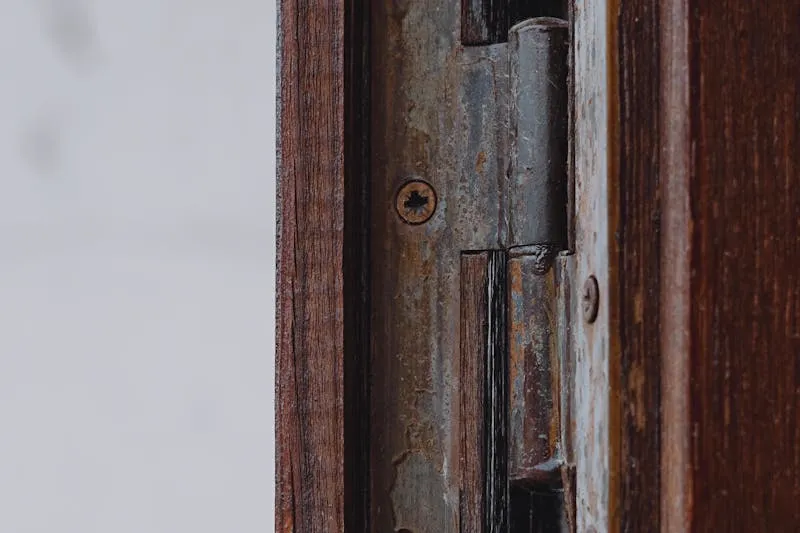
Door hinges squeak when metal rubs against metal without enough lubrication to keep the movement smooth. The hinge pin rotates inside the knuckle — the interlocking cylindrical barrel at the center of the hinge — every time you open or close the door. Over time, the factory lubricant dries out, and that metal-on-metal contact produces friction that you hear as a high-pitched squeak.
The sound itself comes from a phenomenon called stick-slip friction. The pin and knuckle briefly stick together under static friction, then release suddenly, creating rapid micro-vibrations that radiate as sound. Research published by the Harvard John A. Paulson School of Engineering and Applied Sciences in February 2026 found that these friction events generate supersonic detachment pulses — rapid, wrinkle-like waves that travel along the contact surface — and the repetition rate of those pulses determines the pitch of the squeak.
Four conditions commonly trigger the problem:
- Dried lubrication. Factory grease breaks down over months or years of repeated use, leaving bare metal exposed.
- Dust and debris. Fine particles accumulate inside the knuckle and act as abrasives, grinding between the pin and barrel and accelerating wear.
- Rust and corrosion. Moisture — particularly on bathroom doors, kitchen doors, and exterior doors — corrodes the pin and knuckle surface, creating rough patches that catch with every rotation.
- Loose screws. When hinge screws loosen from regular use or house settling, the hinge plates shift slightly. That misalignment forces the pin to travel at an angle through the knuckle, amplifying friction and noise.
5 Easy Methods to Fix Squeaky Door Hinges
1. Lubricate with White Lithium Grease
White lithium grease is the best all-around fix because it's thick enough to stay in place, resists water, and lasts 6 to 12 months per application. To apply it, remove the hinge pin by placing a nail underneath the pin head and tapping upward with a hammer. Pull the pin out once the head clears the top of the knuckle. Apply a thin bead of white lithium grease along the full length of the pin, reinsert it into the knuckle, and open and close the door several times to work the grease through the barrel. Wipe away any excess with a cloth.
White lithium grease is especially effective on exterior doors and heavy doors that get frequent use, because its thick consistency means rain and humidity won't wash it away.
2. Apply Silicone Spray
Silicone spray is ideal for interior doors where you want a clean, residue-free fix. It doesn't attract dust, resists moisture, and lasts 3 to 6 months. You can apply silicone spray without removing the hinge pin: slip a piece of thin cardboard around the hinge barrel to protect the surrounding woodwork from overspray, then give the knuckle a short burst from both the top and bottom. Work the door back and forth a few times to distribute the spray through the barrel.
3. Use Petroleum Jelly
Petroleum jelly is a surprisingly effective hinge fix. Family Handyman recommends it as a go-to solution because it adheres to the pin, won't drip onto floors, and is completely non-toxic. Remove the hinge pin as described above, then dab petroleum jelly into the top of the pin slot using a cotton swab or your fingertip. Reinsert the pin and swing the door back and forth several times. The jelly works its way into the knuckle and stays put — a clear advantage over thinner oils that can run down and stain the woodwork below.
4. Clean and Sand the Hinge Pin
When lubrication alone doesn't stop the noise, the problem is usually rust or built-up grime on the pin itself. Remove the pin and wipe it with a dry cloth. Sand the pin lightly with 120-grit sandpaper to strip any surface corrosion, then wipe off the sanding dust. Use a small brush or pipe cleaner dipped in warm, soapy water to clean inside the hinge knuckle. Dry everything thoroughly before applying your chosen lubricant and reinserting the pin.
This extra cleaning step adds only a couple of minutes but makes the lubricant last significantly longer, because it removes the abrasive particles that cause re-squeaking.
5. Tighten or Replace the Hinges
Sometimes the noise isn't caused by friction inside the knuckle — it's caused by movement of the hinge plate itself. Check all screws on both the door-side and frame-side hinge plates. If any screws are loose, tighten them with a screwdriver. If screw holes are stripped and won't hold, remove the screw, insert a wooden toothpick or golf tee coated in wood glue into the hole, let it dry, trim it flush, and re-drive the screw into the reinforced hole.
If the hinge is visibly worn, bent, or corroded beyond cleaning, replace it. A standard interior butt hinge costs $3 to $8 at any hardware store.
Why You Should Avoid WD-40 on Squeaky Door Hinges
WD-40 is the most common recommendation for noisy hinges — and it's the wrong choice for a lasting fix. WD-40 is a solvent and water displacer, not a lubricant. It contains a small amount of mineral oil, but its primary job is to dissolve existing grease and push out moisture. Spraying WD-40 on the hinges strips away whatever lubrication remains, gives you 2 to 4 weeks of quiet, and then leaves the metal drier and more exposed than before.
WD-40's solvent base also attracts dust and dirt as it evaporates, which accelerates wear inside the knuckle. If you want to use WD-40, treat it as a cleaning step: spray the hinge, wipe it clean, then apply a proper lubricant like white lithium grease or silicone spray on top.
Lubricant Comparison for Squeaky Door Hinges
Not all lubricants perform equally on door hinges. The table below compares longevity, best use case, and drawbacks based on manufacturer data and independent testing.
| Lubricant | Longevity | Best For | Drawbacks |
|---|---|---|---|
| White lithium grease | 6 to 12 months | All doors, especially exterior and heavy doors | Must remove pin to apply properly |
| Silicone spray | 3 to 6 months | Interior doors, no-residue applications | Shorter lifespan than grease |
| Petroleum jelly | 3 to 6 months | Quick household fix, non-toxic | Must remove pin to apply |
| Bar soap or candle wax | 2 to 4 weeks | Temporary emergency fix | Very short-term, not a true lubricant |
| WD-40 | 2 to 4 weeks | Cleaning only (not a lubricant) | Strips existing grease, attracts dust |
How to Prevent Squeaky Door Hinges
The problem is easy to prevent with a small amount of regular maintenance:
- Lubricate every 6 to 12 months. A quick application of silicone spray or lithium grease during seasonal cleaning keeps hinges quiet year-round.
- Wipe hinges during routine cleaning. Removing surface dust prevents it from migrating into the knuckle and grinding against the pin.
- Check screws annually. Tighten any that have worked loose from regular use or settling.
- Use quality hinges in high-traffic areas. Cheap, thin-gauge hinges wear faster and squeak sooner. Solid brass or stainless steel hinges cost more upfront but last years longer before needing maintenance.
When to Replace Your Hinges Instead of Fixing Them
Replace rather than lubricate when the hinge shows severe corrosion — visible pitting on the pin or inside the knuckle — or when the knuckle has noticeable play or wobble even with the pin fully seated. Replacement is also the right call when screw holes in the door or frame are too damaged to hold new screws, even with the toothpick repair. If you've lubricated the same hinge more than three times in a single year, that pattern usually means the hinge itself is worn past the point of effective maintenance and a fresh hinge will solve the problem permanently.
Fix Your Squeaky Door Hinges Today
This repair almost never requires a professional. Remove the pin, clean it, apply a proper lubricant, and reinsert it — the whole job takes less time than searching for a handyman's number. Skip WD-40, choose white lithium grease or silicone spray for a fix that lasts months, and lubricate your hinges once or twice a year so the squeak doesn't come back.
Get our door hardware maintenance checklist — a printable guide to keeping every hinge, latch, and strike plate in your home quiet and working smoothly.
References
- Djellouli, A. et al. "The Physics of a Squeak." Harvard John A. Paulson School of Engineering and Applied Sciences, February 2026.
- "Why Hinges Squeak (And How to Prevent It)." Monroe Engineering (OneMonroe).
- "How To Quiet a Squeaky Door." This Old House.
- "How to Silence a Squeaking Hinge." Family Handyman.
- "How to Fix a Squeaky Door." Bob Vila.
- "How to fix a squeaky door hinge." Schlage.
- "How To Stop A Squeaky Door Hinge in 4 Steps." WD-40.
- "The 6 Best Lubricants for Squeak-Free Door Hinges." Bob Vila.
- "How to Fix Squeaking Door." Lowe's.
- "How to Fix a Squeaky Door." HGTV.