How to Fix a Sticking Door: 6 Methods That Actually Work
A sticking door is one of those household problems that starts small and gets worse. At first it just drags a little when you close it. Then it starts catching hard enough that you have to shove it. Eventually you're body-checking your own bathroom door every morning. The good news: most sticking doors can be fixed in under an hour without removing the door from its frame, and the fix usually costs nothing beyond a screwdriver and a few screws you already own. Below are six methods, ordered from simplest to most involved. Try them in order and stop at the one that works.
Why Doors Stick
A sticking door usually comes down to one of four causes, and knowing which one you're dealing with saves you from fixing the wrong thing.
Humidity. Wood absorbs moisture from the air. When humidity rises -- especially in summer -- the door swells and gets tighter in its frame. Bob Vila notes that indoor humidity above 70% is the threshold where sticking becomes likely. If your door sticks in July but swings fine in January, humidity is almost certainly the cause.
Loose hinges. The top hinge carries most of the door's weight, and over time those screws loosen or strip out of the jamb. When the top hinge drops even slightly, the opposite corner drags against the frame or threshold.
Paint buildup. Every time you repaint a door or frame without sanding between coats, you add thickness. A few extra coats can eat into the 1/8-inch gap that's supposed to exist between the door and frame.
Foundation settling. As a house settles over the years, the door frame can shift out of square. You'll notice this when the gap between door and frame is wider at the top than at the bottom, or vice versa. This one usually needs a professional.
Method 1: Wait It Out (Seasonal Sticking)
If your sticking door appeared during a humid stretch of weather and wasn't a problem before, don't grab the sander yet. WikiHow points out that a door that sticks in summer may swing freely once the humidity drops in fall. Running an air conditioner or a dehumidifier in the room can bring the humidity down enough to un-stick the door without any physical work.
As a quick band-aid while you wait for drier weather, rub a bar of dry soap or a candle along the edge where the door is catching. The wax fills the surface and lets the door slide past the frame. It's a temporary fix, but it keeps you from planing off material you might not need to remove.
Method 2: Tighten the Hinge Screws
This is the sticking door fix that works more often than people expect. Open the door and examine the top hinge. Using a hand screwdriver -- not a drill, which risks stripping the small hinge screws -- snug every screw on both the door side and the frame side. A screw that has backed out by even a quarter turn changes the alignment enough to make a door stick.
Check all the hinges, not just the top one. A loose middle or bottom hinge contributes to the problem, even though the top hinge is usually where it starts.
Method 3: Drive a 3-Inch Screw Into the Stud
If the screws are tight but the sticking door hasn't improved, the problem might be that the jamb has pulled away from the wall framing. Standard hinge screws are only about an inch long and grab nothing but the jamb wood. Replace one of the top hinge's frame-side screws with a 3-inch screw, which passes through the jamb and bites into the wall stud behind it. This pulls the entire jamb tighter against the framing and shifts the door away from the sticking point.
Family Handyman recommends replacing the screw closest to the doorstop, while The Spruce says the middle screw. Either works -- the point is to use just one long screw per hinge. More than that risks bowing the jamb and opening gaps at the trim joints. Drive it with a drill, then finish with a final quarter-turn by hand so you don't overtighten.
Method 4: Adjust the Strike Plate
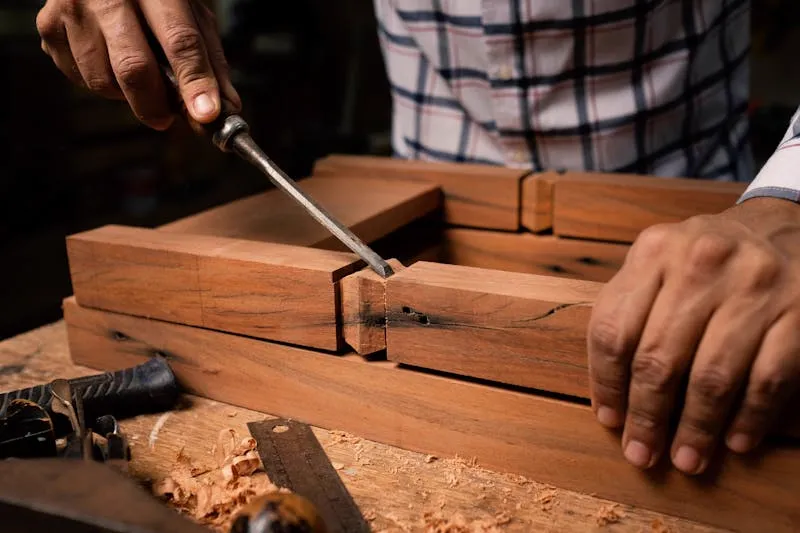
Sometimes the door isn't catching against the frame at all -- it's catching on the strike plate or the doorstop. Close the door slowly and watch where it makes contact. If the latch bolt is hitting the lip of the strike plate rather than sliding cleanly into the hole, loosen the strike plate's screws and shift it slightly to realign with the latch. You may need to widen the strike plate mortise with a chisel to allow the plate to sit in its new position.
If the doorstop itself is what's in the way -- common after repainting -- pry it off with a thin pry bar, reposition it so it sits flush against the closed door, and nail it back in place.
Method 5: Plane or Sand the Door
Planing a sticking door is the last resort, not the first step. Every other method on this list tries to move the frame or hardware rather than removing wood from the door itself. The reason: wood shrinks in winter when humidity drops. If you plane off material in July to fix summer swelling, you might end up with a noticeable gap by December.
If you do need to plane, first find out exactly where the door is binding. Close it and look for scuff marks on the edge, or slide a piece of paper between the door and frame -- it will stop at the tight spot. Use a pencil to mark the area.
A block plane or a belt sander both work. The block plane gives you finer control, which matters when you're trying to remove 1/16 inch and not 1/4 inch. Set it to a shallow cut depth and take long, even passes. If you use a belt sander, go slow -- it removes material fast and you can't put it back.
After planing, seal the raw wood immediately. This Old House's Tom Silva stresses this point: exposed wood absorbs moisture right back, and you'll be in the same spot next summer. A coat of primer and paint, or a wipe of polyurethane, closes the surface and keeps the fix permanent. Family Handyman suggests applying poly with a lint-free rag rather than a brush for a smoother finish.
Method 6: Fix Stripped Screw Holes
If a hinge screw just spins when you try to tighten it, the wood around the hole has been crushed and the screw threads have nothing to grip. You have two options.
The quick fix: coat a wooden toothpick or two in wood glue, pack them into the stripped hole, and snap them off flush. Let the glue dry for an hour, then re-drive the screw. The toothpicks give the threads fresh wood to bite into.
The permanent fix: drill out the hole with a 3/8-inch bit, glue in a wooden dowel, tap it flush, and let it dry. Then drill a pilot hole through the center and drive your screw into solid wood. This holds up better on heavy doors where the toothpick method might strip out again over time.
When to Call a Professional
Most sticking door repairs are straightforward DIY work. But if you notice the gap between door and frame varies by more than a quarter inch from top to bottom, the frame is likely out of square due to foundation settling or structural movement. Five of the eight sources we checked flag this as the point where professional help is warranted. Angi reports that professional door repair runs $130 to $375 on average, or about $60 to $130 per hour for a handyperson.
Also consider a pro for solid exterior doors that need planing. Getting the reveal right (1/8 inch all around, the thickness of a nickel) while maintaining the weatherseal takes precision that's hard to achieve with a handheld sander. And if your home was built before 1978, test for lead paint before sanding -- chemical strippers are safer than creating lead dust.
If the sticking turns out to be caused by the hinges themselves -- worn knuckles, bent leaves, or corroded pins -- see our guide on how to fix squeaky door hinges for diagnosis and repair steps.
Get our door hardware maintenance checklist -- a printable guide to keeping every hinge, latch, and strike plate in your home quiet and working smoothly.
References
- "How to Fix a Door That Sticks." This Old House. Updated July 2, 2025.
- "How to Fix Sagging or Sticking Doors." Family Handyman. Updated July 27, 2023.
- "How to Fix a Sticking Door." Bob Vila. Updated October 7, 2020.
- "5 Ways to Fix a Jammed Door & Stop It From Sticking." wikiHow. Co-authored by Gino Colucci. Updated December 6, 2024.
- "How to Fix a Door That Sticks: 5 Different Methods." Angi. Updated April 6, 2026.
- "How to Fix a Door That Sticks." The Spruce. By Lee Wallender. Updated March 4, 2023.
- "How to Fix a Sticking Door." True Value.
- "How to Fix a Sticky Door." Lowe's. Updated February 2, 2023.