Best Door Hinge Lubricants: 5 Products Compared
A squeaky hinge is a friction problem, and friction problems demand the right lubricant. Grab the wrong product and you get two quiet weeks followed by a squeak that returns worse than the original. Choose the right door hinge lubricant and the fix lasts six months to a full year with zero maintenance in between.
We compared the five most recommended products across durability, ease of application, and cost. This guide ranks them, includes a comparison table, and settles the WD-40 debate once and for all.
1. White Lithium Grease — Best Overall Pick
White lithium grease is the top-performing door hinge lubricant for one reason: longevity. A single application lasts 6 to 12 months on interior doors and holds up nearly as long on exterior doors exposed to rain and humidity. The grease is thick enough to cling to the hinge pin without dripping, and it resists water washout far better than any spray or oil.
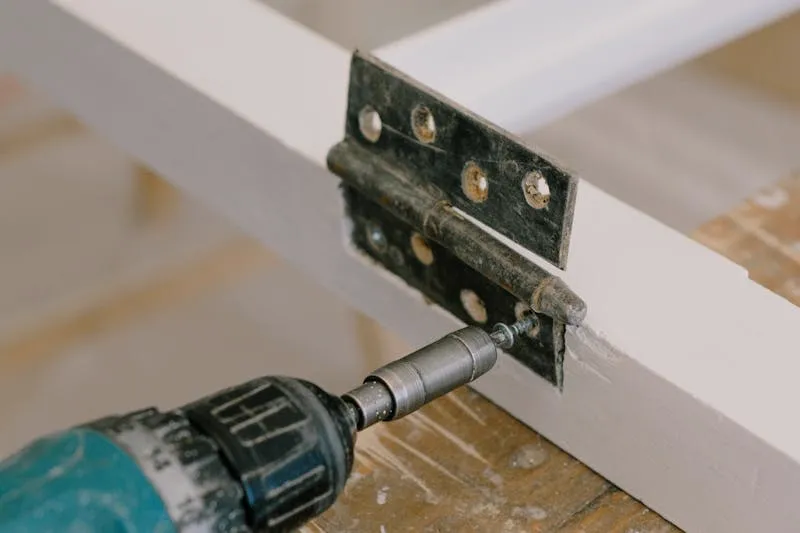
To apply, remove the hinge pin by tapping upward under the pin head with a nail and hammer. Wipe the pin clean, apply a thin bead of grease along its full length, then reinsert it into the knuckle barrel. Work the door back and forth to distribute the grease. The tube version ($4 to $8 for 10 ounces) gives better precision than aerosol.
2. Silicone Spray — Best for Clean Results
Silicone spray is the best choice for interior doors where a residue-free result matters. It dries to a thin, invisible film that does not attract dust or lint — a real advantage in bedrooms, home offices, and living areas where white grease residue would be visible. Silicone spray lasts 3 to 6 months per application, roughly half the lifespan of lithium grease.
Application is faster because you do not need to remove the pin. Shield the surrounding frame with thin cardboard, give the top and bottom of the knuckle a one-second burst each, and swing the door several times. This makes it especially effective on painted-over hinges where the pin is difficult to remove. A standard 11-ounce can runs $5 to $10, but high-traffic doors may need reapplication every 2 to 3 months.
3. Petroleum Jelly — Best Budget Option
Petroleum jelly is a surprisingly effective door hinge lubricant that most households already own. Family Handyman recommends it because it adheres to the pin, does not drip onto floors, and is completely non-toxic — a genuine advantage in homes with small children or pets. It delivers 3 to 6 months of quiet operation per application.
Remove the pin, clean it, then coat it with a thin layer using a fingertip or cotton swab. Dab a small amount into the knuckle barrel before reinserting. Because it is semi-solid at room temperature, petroleum jelly stays in place rather than running down and staining woodwork. A 7.5-ounce jar costs just $3 to $5. The trade-off: it softens in heat and can migrate away from contact surfaces when temperatures exceed 90 degrees Fahrenheit.
4. Graphite Powder — Best for Extreme Temperatures
Graphite powder is a dry lubricant that deposits microscopic platelets between metal surfaces. Those platelets slide over each other with very low friction, reducing noise without any liquid component. This makes graphite the right choice where wet lubricants fail: exterior doors in freezing climates, garage-to-house doors exposed to temperature swings, and workshop doors in dusty environments where oil-based products attract abrasive particles.
Remove the pin, sprinkle powder into the knuckle barrel and along the pin, then reinsert and work the door back and forth. Graphite does not evaporate, freeze, or attract dust — it remains effective from well below zero to over 400 degrees Fahrenheit. The disadvantage is mess: the dark gray powder smudges easily and can mark light-colored doors and flooring. A 1.5-ounce tube costs $3 to $7.
5. 3-in-1 Multipurpose Oil — Best for Quick Fixes
3-in-1 multipurpose oil penetrates tight spaces quickly, lubricates immediately, and provides moderate corrosion protection. It delivers 1 to 3 months of quiet operation — the shortest lifespan of any true door hinge lubricant on this list, but more than enough when you need results in under a minute.
Place 2 to 3 drops at the top of each hinge knuckle and swing the door back and forth to let gravity pull the oil through the barrel. No pin removal required, which makes it the fastest method to fix squeaky door hinges. The primary drawback is dripping — 3-in-1 oil is thin enough to run down and stain the door or flooring. It also attracts dust over time, creating gritty buildup inside the knuckle that accelerates wear. A 3-ounce bottle costs $3 to $6.
Door Hinge Lubricant Comparison Table
| Product | Longevity | Best For | Price Range | Drawbacks |
|---|---|---|---|---|
| White lithium grease | 6 to 12 months | All doors, especially exterior and heavy | $4 to $8 | Requires pin removal; visible white residue |
| Silicone spray | 3 to 6 months | Interior doors, painted hinges | $5 to $10 | Shorter lifespan; overspray risk |
| Petroleum jelly | 3 to 6 months | Budget fix, homes with children or pets | $3 to $5 | Requires pin removal; softens in heat |
| Graphite powder | 6 to 12 months | Extreme temperatures, dusty environments | $3 to $7 | Messy dark residue; lower noise reduction |
| 3-in-1 multipurpose oil | 1 to 3 months | Quick fixes, time-sensitive repairs | $3 to $6 | Drips and stains; attracts dust |
Why WD-40 Is Not a Lubricant
WD-40 is the most common recommendation for squeaky hinges, and it is the wrong product for a lasting fix. WD-40 is a solvent and water displacer — the name stands for "Water Displacement, 40th formula" — not a lubricant. When you spray it on a hinge, the solvent strips away whatever grease remains on the pin and knuckle.
The hinge goes quiet for 2 to 4 weeks while residual mineral oil provides minimal protection. Then the solvent evaporates, leaving the metal drier than before. The squeak returns — often louder. WD-40 also attracts dust as it breaks down, creating abrasive paste inside the barrel. Use WD-40 only as a cleaning step: spray, wipe clean, then follow with a proper door hinge lubricant.
How to Apply Lubricant Correctly
The application method matters as much as product choice. Follow these steps for the longest-lasting result:
- Clean the hinge first. Wipe down the exposed plates and knuckle. For visible rust, use WD-40 on a rag to clean surfaces before lubricating.
- Remove the pin when possible. Tap upward under the pin head with a nail and hammer. If the pin is stuck, apply penetrating oil and wait 10 minutes.
- Sand corroded pins. Use 120-grit sandpaper on any rust or rough spots, then wipe off sanding dust.
- Apply to both surfaces. Coat the full length of the pin and apply a small amount into the top of the knuckle barrel.
- Reinsert and work the door. Tap the pin down until fully seated, then open and close the door 8 to 10 times to distribute product through the barrel.
- Wipe excess. Remove any lubricant that has squeezed out to prevent dust accumulation and paint staining.
When to Reapply
Lubricate interior doors every 6 to 12 months and exterior doors every 3 to 6 months. High-traffic doors — front entries, kitchen-to-garage passages — may need attention at the shorter end of those ranges. Do not wait for the squeak to return: by the time you hear it, the metal surfaces have already been running without adequate protection, which accelerates wear on the pin and knuckle. Add door hinge lubricant reapplication to your seasonal maintenance checklist and the problem stays permanently solved.
The Bottom Line
White lithium grease is the best door hinge lubricant for most households — it lasts the longest, costs under $8, and works on every type of door. Silicone spray wins on cleanliness for interior doors. Petroleum jelly is the cheapest effective option. Graphite powder handles temperature extremes that defeat wet lubricants. And 3-in-1 oil is the fastest fix when you need silence in under a minute. Whatever you choose, skip the WD-40 and apply the product to a clean hinge pin for a result that lasts months, not weeks.
Get our door hardware maintenance checklist — a printable guide to keeping every hinge, latch, and strike plate in your home quiet and working smoothly.
References
- "The 6 Best Lubricants for Squeak-Free Door Hinges." Bob Vila.
- "How to Silence a Squeaking Hinge." Family Handyman.
- "How to fix a squeaky door hinge." Schlage.
- "How To Stop A Squeaky Door Hinge in 4 Steps." WD-40.
- "How to Fix Squeaking Door." Lowe's.
- "Why Hinges Squeak (And How to Prevent It)." Monroe Engineering.
- "How To Quiet a Squeaky Door." This Old House.
- "How to Fix a Squeaky Door." HGTV.